
Table of Contents
Toggle⚠️ Medical disclaimer: This post covers the mild, common physical disruptions most 75 Hard participants experience. It is not medical advice. If you have symptoms that are severe or persistent including confusion, rapid heartbeat, vomiting, or extreme fatigue, stop and contact your GP. People with kidney conditions, heart conditions, or who are pregnant should consult a doctor before significantly increasing fluid intake.
Key Takeaways
A stalled scale on 75 Hard is common, not a sign you’re doing something wrong.
- Under-logging food is an involuntary bias almost everyone has, not a personal failing, and it’s one of the most likely hidden causes of a “phantom” deficit.
- Fitness trackers can overstate calories burned by a wide margin, so don’t eat back what they claim.
- Rapid early loss is mostly water. Realistic ongoing loss sits at 0.5–1kg per week.
- Muscle gain and training-related water retention are separate from a true metabolic plateau, and they need different fixes.
- If a plateau runs past 4 – 6 weeks, a GP conversation is a better next step than more restriction.
Introduction
If you’re not losing weight on 75 Hard despite ticking every box, the problem almost certainly isn’t your effort. It’s what nobody tells you about how the scale really works.
You’ve done the workouts. You’ve stuck to the diet. And the number on the scale hasn’t moved in weeks.
75 Hard doesn’t actually specify a diet. That’s part of the problem: you’re left combining a gruelling training load with a calorie target you’ve had to guess at yourself. For a full breakdown of what to eat on the programme, our 75 Hard meals guide covers meal plans, macros and prep tips in detail. This post assumes you’ve already got a working food plan in place.
What we’re covering here is different: why the scale doesn’t always reflect your progress, and what’s actually going on behind the numbers. That means tracker accuracy, hidden calories, water weight, and what a genuine plateau looks like.
Why the Scale Isn’t Moving on 75 Hard
Your Calorie Deficit May Be Smaller Than You Think
Most people underestimate what they eat. A splash of oil here, a taste of sauce there. It all adds up, and it rarely gets logged.
This isn’t about honesty. It’s a well-documented bias that affects almost everyone, and it gets worse, not better, on restrictive diets. Research published in Current Developments in Nutrition found that people on low-calorie diets under-report their intake at nearly double the rate of the general population, 38.84% compared with 22.89% (Storz & Ronco, 2025). The study used doubly labelled water, a gold-standard method, to compare what over 18,000 US adults said they ate against what their bodies actually used. Even trained dietitians show this pattern, so it isn’t a discipline problem.
So if you’re following 75 Hard’s strict eating rules and still not seeing results, your deficit may simply be smaller than the numbers on your app suggest. This directly addresses one of the most common frustrations reported by 75 Hard participants: full compliance with no visible weight loss.
The fix isn’t stricter willpower, it’s better measurement. Weighing calorie-dense extras (oils, dressings, nut butters) rather than eyeballing them closes most of the gap. If you’re using the GoodLife App, running your meals through the verified food database or scanning packaging with the barcode scanner removes most of the guesswork that causes this bias in the first place, rather than relying on memory at the end of the day.
Your Fitness Tracker Is Probably Overestimating Calories Burned
If you’re “earning back” calories based on what your watch tells you, you may be eating into a deficit that never existed.
Wearables are reliable for heart rate, steps and sleep tracking. Calories burned is a different story. A study in the JMIR mHealth and uHealth journal tested six wearable devices and two smartphone apps against gold-standard measurements, and found energy expenditure estimates were off by as much as 44% (Xie et al., 2018).
That’s a big margin. If your tracker says you burned 600 calories on a HIIT session, the real number could be closer to 400. Eating back the difference each day can quietly cancel out your deficit, which explains why tracker-reliant dieters often stall despite feeling strict with their food.
It’s worth being honest about why this is hard to hear: you want credit for two workouts a day, and a big calorie number on your watch feels like proof of the effort. The trouble is that number isn’t measuring your effort accurately, it’s guessing at it. If you track meals in the GoodLife App, switching off any setting that adjusts your daily calorie goal based on tracker-reported activity stops this overestimate from quietly padding your intake allowance.
Early Water Weight Loss Isn’t Fat Loss
Week one on 75 Hard can feel dramatic. The scale drops fast, then it doesn’t.
That first drop is mostly water and glycogen, not fat. Your body uses stored carbohydrate for energy when you cut calories, and glycogen holds onto water. Once that store empties, the rapid loss stops, and this is completely normal.
NHS guidance confirms that a safe, sustainable rate of weight loss sits at 0.5 to 1kg per week (NHS Inform, 2026). That’s a fraction of what many people lose in their first fortnight. If your progress slows to this pace after week two or three, it isn’t a sign the programme has stopped working. It’s a sign it’s working the way it’s supposed to.
Muscle Gain and Water Retention Can Both Mask Progress on the Scale
Two workouts a day is a lot of training, especially if you’re new to regular exercise. That kind of volume does two things to the scale that have nothing to do with fat.
First, it builds lean muscle. Muscle is denser than fat, so it takes up less space for the same weight, which means your body can genuinely change shape while the scale barely shifts.
Second, high training volume causes exercise-induced inflammation, and inflamed muscle tissue holds onto water as it repairs. This is a different mechanism to the glycogen-driven water loss you see in week one: it’s an ongoing, training-linked fluid shift rather than a one-off adjustment, and it can mask fat loss for days at a time, particularly after you increase intensity.
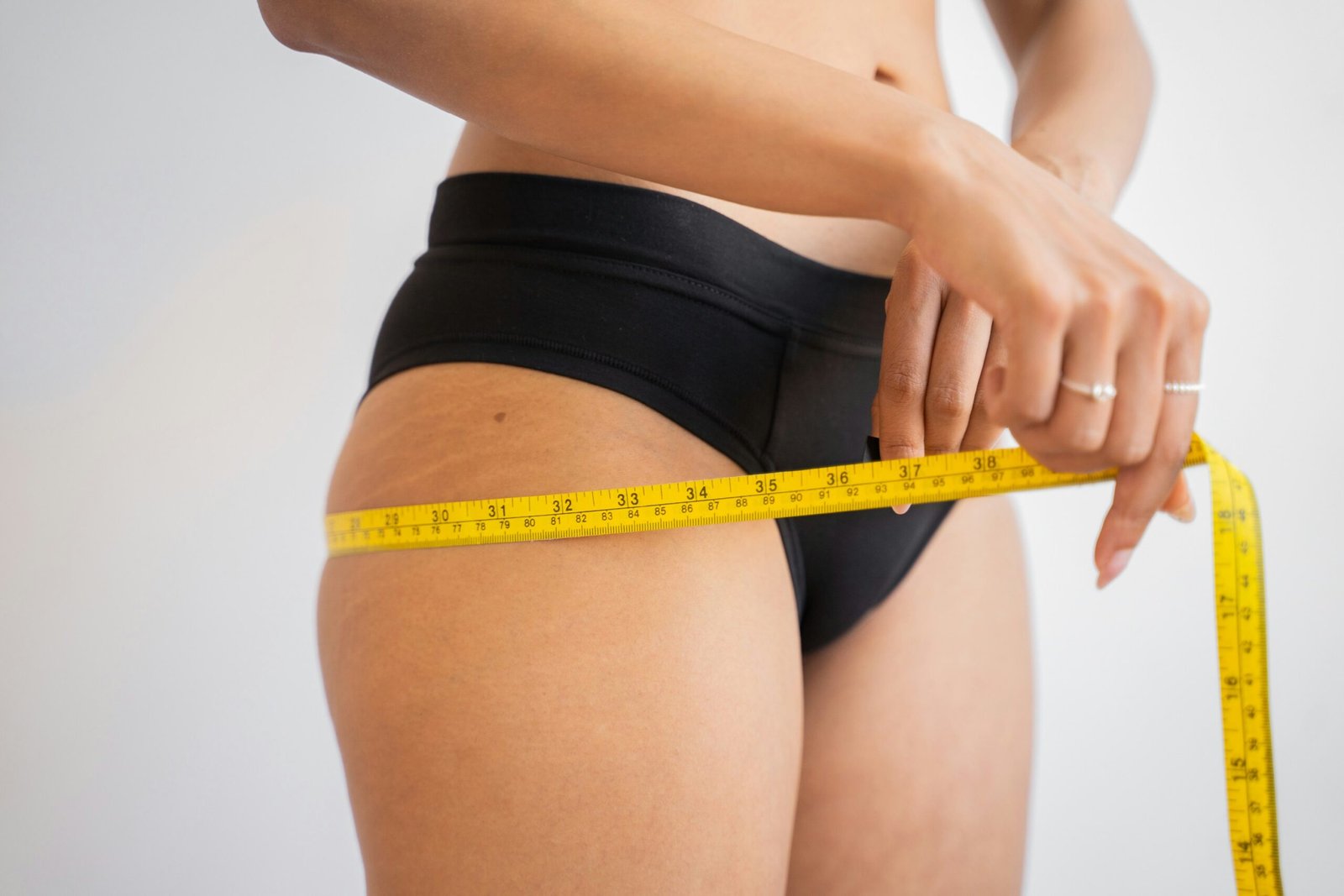
A tape measure, progress photos or how your clothes fit can tell a very different story to the number under your feet. If you’re seeing changes in your body but not on the scale, that’s worth paying attention to rather than dismissing, and it’s a separate issue from a genuine long-term plateau, which is covered next.

A Plateau Doesn’t Mean the Programme Has Stopped Working
A flat few weeks on the scale can feel like proof you’re failing. The data says otherwise.
Weight loss plateaus affect roughly 85% of dieters, according to a clinical review published on the NCBI Bookshelf (StatPearls, 2024). Unlike the muscle and water effects above, a true plateau is driven by metabolic adaptation: as you lose weight, your body needs fewer calories to maintain itself, so the same deficit that worked in week one produces smaller results by week six.
A short plateau is a normal part of any weight loss journey, not a red flag. If it stretches past 4–6 weeks with no shift at all, that’s the point to speak with your GP, particularly if you’ve noticed other symptoms alongside it.
FAQs
Why am I not losing weight on 75 Hard even though I’m in a calorie deficit?
Under-reporting intake is common on restrictive diets, and it’s an involuntary bias rather than a personal failing. Research shows people following low-calorie diets misjudge their true intake nearly twice as often as everyone else, so the deficit may be smaller than it looks on paper.
Is it normal to not lose weight in the first few weeks of 75 Hard?
Yes. Rapid early loss is mostly water and glycogen, not fat. Once that settles, the scale naturally slows, and this isn’t a sign the programme has stopped working.
Can 75 Hard build muscle instead of burning fat, which is why the scale isn’t moving?
Two daily workouts can add lean muscle alongside fat loss. Muscle is denser than fat, so the scale can plateau even while your body composition genuinely improves.
How accurate is my fitness tracker’s calorie burn on 75 Hard?
Not very. Validation studies show trackers are reliable for heart rate and steps but can be off by up to 44% on calories burned, which throws off any deficit calculated from calories eaten minus calories burned.
What counts as a normal weight loss plateau, and when should I worry?
A stall of a few weeks despite consistent effort is common, affecting roughly 85% of dieters. If it persists for more than 4–6 weeks alongside other symptoms, it’s worth checking with a GP.
Should I trust a food diary over my fitness tracker during 75 Hard?
Neither is perfect, but logging food tends to be more controllable than device-estimated calorie burn. The main risk with food diaries is under-reporting portions, not the tool itself.
How much weight should I realistically expect to lose over 75 days?
Based on NHS-recommended safe rates of 0.5–1kg per week, a realistic range over 75 days is around 5 – 11kg, which is far more conservative than the dramatic transformations often shown online.
Could water retention be masking fat loss on 75 Hard?
Yes. Daily water intake, sodium, exercise-induced inflammation and hormonal shifts can all move the scale by a kilogram or more day-to-day without reflecting any real change in body fat.
If you’re still not losing weight on 75 Hard, the fix usually isn’t more restriction. It’s checking your inputs: what you’re really eating, what your tracker is really measuring, and how much time your body genuinely needs to show the change on the scale.
For the meal planning side of the challenge, our 75 Hard meals guide has everything you need to build a sustainable plan from day one.
References
NHS Inform · 2026 · Tips for losing weight safely · https://www.nhsinform.scot/healthy-living/weight-loss/tips-for-losing-weight-safely/
- Storz, M.A. & Ronco, A.L. · 2025 · Energy Underreporting in Low-Calorie and Carbohydrate-Restrictive Diets: Epidemiological Considerations · https://doi.org/10.1016/j.cdnut.2025.107557
- Xie, J., Wen, D., Liang, L., Jia, Y., Gao, L., Lei, J. · 2018 · Evaluating the Validity of Current Mainstream Wearable Devices in Fitness Tracking Under Various Physical Activities: Comparative Study · https://pmc.ncbi.nlm.nih.gov/articles/PMC5920198/
- StatPearls (NCBI Bookshelf) · 2024 · Management of Weight Loss Plateau · https://www.ncbi.nlm.nih.gov/books/NBK576400/